
Dive into the heart of one of the oldest civilizations in Africa. The Amhara people embody a millennia-old heritage that still fascinates today. This community represents an essential part of Ethiopian identity.
Nearly 20 million inhabitants make up this major ethnic group. They form the second largest in the country. Their territory mainly extends in the north and center of Ethiopia.
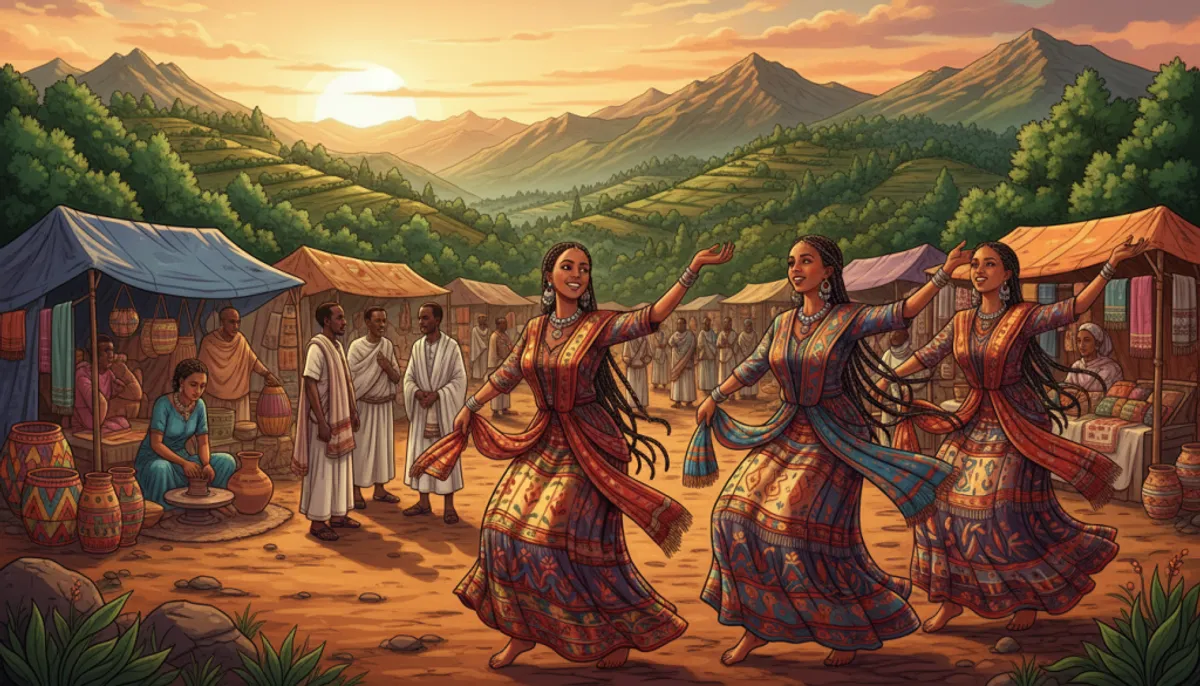
This region harmoniously combines a glorious past with natural beauties. You will discover spectacular landscapes and a rich history. Dynamic cities coexist with preserved rural areas.
We invite you on a captivating journey through the centuries. Explore the traditions, art, and spirituality of this people. Discover how they have shaped Ethiopian national identity.
Key Points to Remember
- The Amhara people represent a major community in Ethiopia
- This culture has a fascinating millennia-old history
- The Amhara region offers exceptional natural landscapes
- This influence has greatly contributed to national identity
- Tradition and modernity coexist harmoniously
- Amharic is the main language of this community
- Remarkable historical sites are scattered throughout this region
Overview of Amhara Culture and Its Challenges
The millennia-old history of this community still shapes national identity today. This population represents a fundamental pillar for the country's development.
Historical and Cultural Context
For over two thousand years, the highlands of central Ethiopia have housed this civilization. The mountainous terrain has provided natural protection against external influences.
The ancient kingdom of Abyssinia developed in relative isolation. This situation allowed for the emergence of a unique and preserved society.
Traditional agriculture forms an essential economic base. This ethnic group dominates the production of local grains.
| Traditional Grain | Main Use | Economic Importance |
|---|---|---|
| Teff | Making injera | International export |
| Nug | Staple food | Local production |
| Ethiopian wheat | Traditional bread | Regional market |
Importance in Ethiopian Identity
The political role of this people has marked the history of the country. For centuries, they ruled the Ethiopian empire until 1974.
The official language of the country has its roots in this tradition. This linguistic influence unites the different regions of the territory.
The preservation of traditions in the face of modernization represents a major contemporary challenge for this population.
More than 20% of the country's inhabitants belong to this group. This demographic confirms its national importance.
Historical Origins and Multiple Influences
The roots of this civilization date back to ancient times, blending legends and historical facts. Some accounts suggest origins in modern Yemen before settling in the north of Ethiopia.
Legends and Notable Facts
The first documented mention appears in the 12th century during the Zagwe dynasty. In 1129, conflicts with the Werjih are recorded.
The rise of the Solomon dynasty in 1270 marks a turning point. This lineage will govern the empire for several centuries.
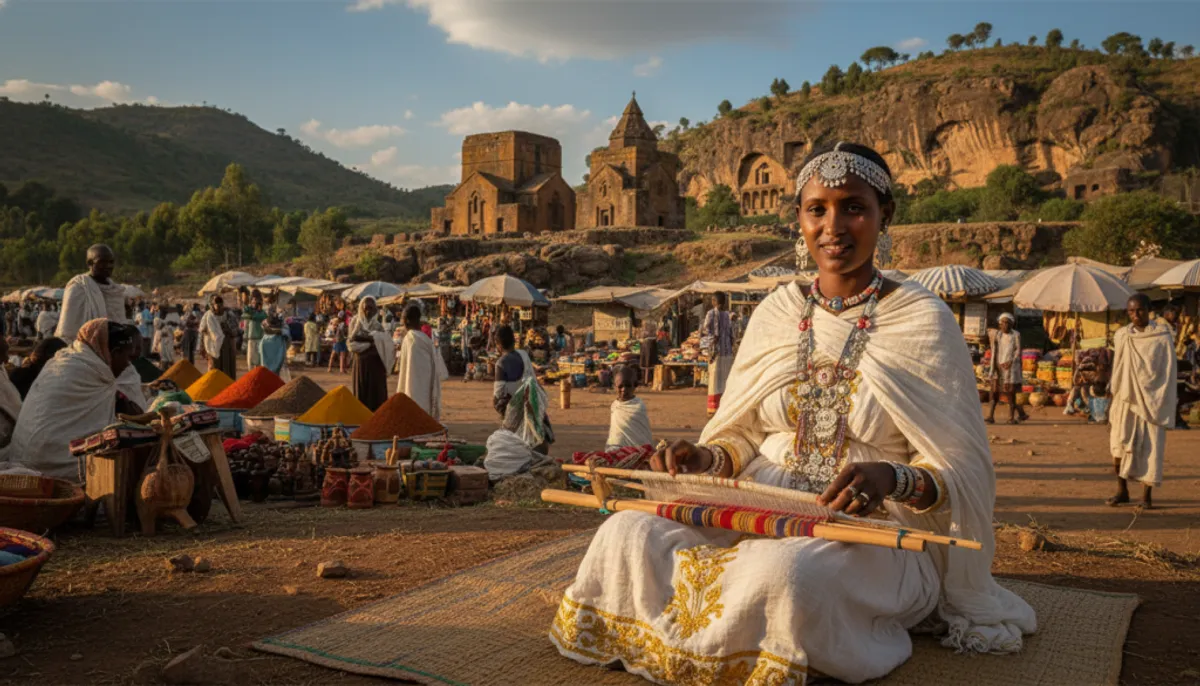
Archaeological remains such as the Lion Geta statues testify to the Aksumite expansion. These discoveries date back to the 3rd century.
| Historical Period | Major Event | Lasting Impact |
|---|---|---|
| 12th century | First historical mention | Beginning of documentation |
| 1270 AD | Beginning of Solomon dynasty | Political domination |
| 16th century | Muslim invasions | Destruction of sites |
The Influence of Orthodox Christianity
The Christian presence dates back to the 8th century with the monastery of Istifanos. The Tehuwedo Orthodox Church has ancient roots.
Ethiopia became the second country in the world to adopt this faith. As early as the 4th century, it profoundly influences regional identity.
This religious history forms an essential part of the heritage. The church has played a key role for many years.
Heritage and Iconic Sites of the Amhara Region
The Amhara region stands out for its iconic sites listed as UNESCO World Heritage. This part of the country preserves internationally significant architectural and natural treasures.
The Archaeological and Historical Treasures
The Ethiopian plateaus house remains dating back several centuries. The Simien Mountains National Park, nicknamed the "Roof of Africa," offers spectacular landscapes.
Lion Geta statues dating from the 3rd century testify to the antiquity of this civilization. These archaeological discoveries attract researchers from the world over.
Discovering the Mythical Cities: Bahir Dar, Gondar, and Lalibela
Bahir Dar, the modern capital of the region, is located on the shores of Lake Tana. This lake is home to over twenty historical monasteries on its islands.
Gondar, the former imperial capital, features castles from the 16th and 17th centuries. The city deserves its nickname "Camelot of Africa."
Lalibela impresses with its eleven monolithic rock-hewn churches. Hand-carved from the rock, they constitute an architectural masterpiece.
| City | Main Attraction | Historical Period | UNESCO Ranking |
|---|---|---|---|
| Bahir Dar | Lake Tana and monasteries | 14th century | Cultural heritage |
| Gondar | Royal castles | 16th-17th centuries | World heritage |
| Lalibela | Rock-hewn churches | 12th-13th centuries | World heritage |
These exceptional sites enhance the reputation of this region across the country. They represent a precious heritage preserved on the high plateaus.
The Art of Living: Traditions, Religion, and Customs
The spiritual and familial traditions form the beating heart of this fascinating society. The Ethiopian Orthodox religion has profoundly influenced the daily lives of the populations for centuries.
Religious and Liturgical Practices
The Tewahedo Orthodox church plays a central role in community life. According to the 2007 census, 82.5% of the inhabitants practice this faith.
Historical ties unite this church with that of Alexandria. This connection dates back to the 4th century.
Celebrations like Timkat and Fasika mobilize the entire community. Colorful processions and liturgical songs animate these events.
Rituals, Marriages, and Ancestral Festivities
Marital unions often follow family arrangements. Men typically marry in late adolescence.
The minimum age for women was raised to 18 years in the 20th century. This evolution shows the adaptation of traditions.
At birth, a priest visits the family to bless the child. Baptism occurs 40 days later for boys.
These rituals mark important life stages. They strengthen bonds within the people.
Social Structure and Traditional Stratification
Traditional social stratification reveals a complex organization of this society. Anthropologist Donald Levine identified four fundamental strata that structured relationships among different groups.
Castes, Classes, and Hierarchies
This system distinguished high-ranking clans, lower clans, specialized artisans, and slaves. Each group had a well-defined traditional occupation.
Artisans – blacksmiths, potters, tanners – formed distinct social groups with strict marital restrictions. Their status was transmitted hereditarily according to principles of endogamy.
At the bottom of the hierarchy were the slaves, primarily from nilotic populations captured during raids. This institution officially ended in the 1930s under the imperial government.
Evolution of Social Ties Over the Centuries
Over the centuries, this rigid system has undergone gradual transformations. Modernization and urbanization have contributed to loosening social barriers.
The fall of the monarchy in 1974 accelerated these structural changes. However, some distinctions persist in rural areas where the inhabitants maintain ancestral practices.
Today, social integration represents a significant challenge for this region. The people strive to overcome divisions inherited from the past while preserving their rich heritage.
The Amhara Region Today: Modernity and Rural Traditions
The contemporary landscape of this Ethiopian region reveals a fascinating duality between tradition and modernity. More than 20 million inhabitants populate this region in the north of the country.
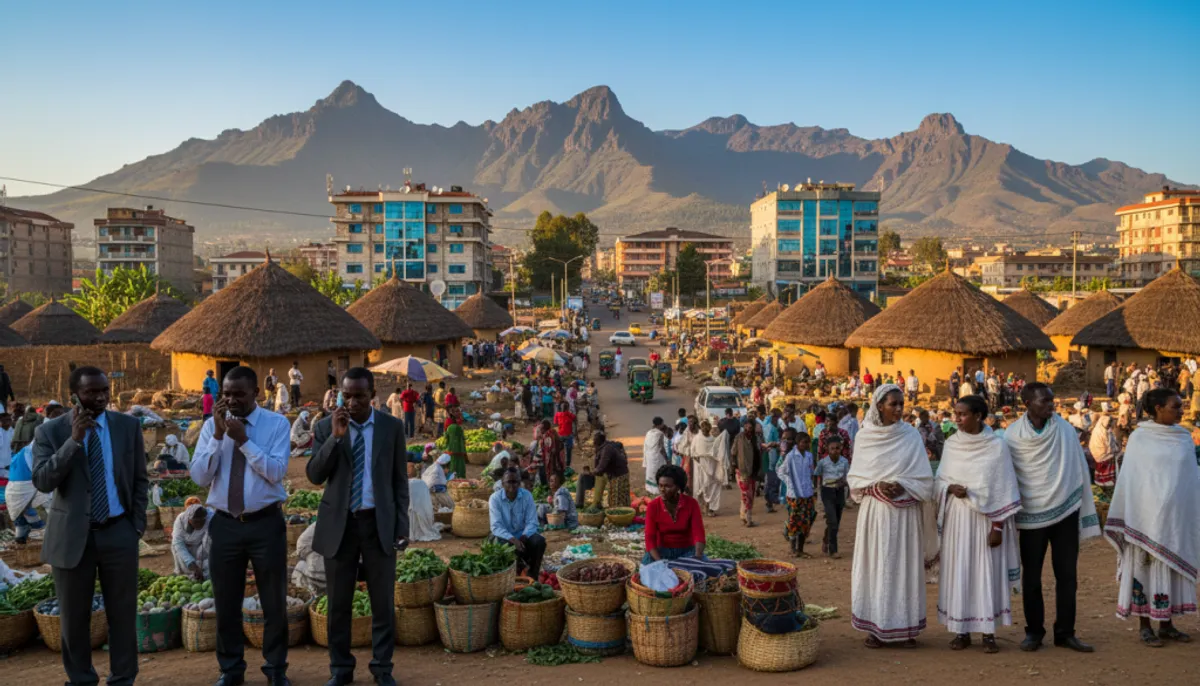
The Major Cities and Their Dynamism
Bahir Dar, Gondar, and Dessie represent the main urban centers. These cities have experienced rapid growth in recent years.
Their economic development attracts a young population from the rural plateaus. This migration is gradually transforming the social fabric.
| Main City | Specialization | Estimated Population | Growth Rate |
|---|---|---|---|
| Bahir Dar | Regional capital | +300,000 inhabitants | 4.5% annually |
| Gondar | Historical tourism | +250,000 inhabitants | 3.8% annually |
| Dessie | Industrial center | +200,000 inhabitants | 5.2% annually |
The Challenges of Agriculture and Urbanization
Subsistence agriculture dominates the rural regions. Farmers depend on seasonal rains in the high plateaus.
The regional government is developing irrigation programs. The goal is to modernize traditional techniques.
The Awra Amba community illustrates remarkable social innovation. Located between Bahir Dar and Gondar, it challenges traditional norms.
Conclusion
This millennia-old civilization continues to shine through the ages with remarkable vitality. Its rich history of over two thousand years has indelibly shaped Ethiopian identity.
The region is home to exceptional heritage treasures that attract the world over. Sites like Lalibela testify to a profound spiritual legacy.
Despite the challenges of modernization, this culture demonstrates extraordinary resilience. The younger generations proudly carry this heritage while looking towards the future.
We invite you to personally discover this fascinating land. Whether through travel or study, this exploration will offer you unforgettable discoveries.
FAQ
Where is the Amhara region located in Ethiopia?
This area is located in the northwest of the country. It is famous for its high plateaus and houses a significant part of the national population.
What role has Orthodox Christianity played in the development of this society?
The religion has had a major influence for centuries. The Tewahedo Church has shaped laws, art, and the system of thought, becoming a central pillar of identity.
What are the most iconic historical sites to visit?
Don't miss the rock-hewn churches in Lalibela, the castles of Gondar, and the shores of Lake Tana near Bahir Dar. These places tell a millennia-old story.
How do inhabitants of rural areas live today?
Many practice traditional agriculture. However, cities are experiencing rapid growth, creating a fascinating blend of ancestral customs and modernity.
What are the main festivals and celebrations?
Major religious festivals like Timkat (Epiphany) and Meskel (Feast of the True Cross) are widely celebrated. Weddings are also major social events, rich in rituals.