
Welcome to a captivating journey through a Mediterranean country with a rich past. Tunisia represents a unique synthesis shaped by over three millennia of history.
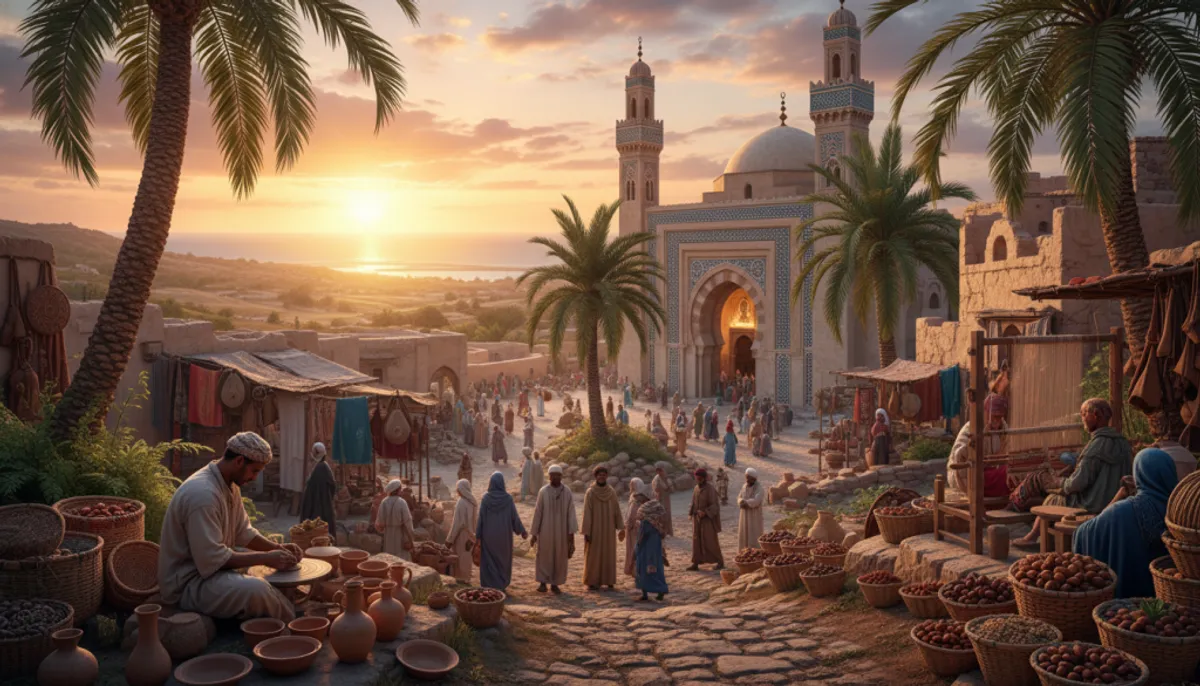
This land has been an extraordinary crossroads of civilizations. Amazigh, Punic, Roman, Arab, Ottoman, and French influences have all contributed to its current identity. Each era has left visible traces in the architecture, traditions, and modern society.
The Tunisian heritage fascinates with its authenticity. From UNESCO-listed medinas to diverse culinary influences, each element tells a part of this historical epic. The world recognizes this exceptional cultural richness.
Explore how this country has managed to preserve its traditions while evolving with the times. Discover the museums, local crafts, and the unique atmosphere that makes Tunisia an incomparable cultural destination.
Key Points to Remember
- Tunisia has a rich history spanning 3000 years
- Several civilizations have influenced its development
- The architectural heritage is exceptionally varied
- The modern society blends tradition and modernity
- The cuisine reflects this cultural diversity
- The medinas are classified as world heritage
- The country remains an important cultural crossroads
Introduction to Tunisian Culture
The true treasure of this territory lies in its capacity for assimilation. According to experts, this society does not represent a completely original creation, but rather a remarkable harmonization of successive contributions.
This small country has experienced layers of doctrines and customs of rare intensity. Rafik Saïd highlights this unique characteristic in the Mediterranean. Cultural confrontations have created an exceptional melting pot.
The monuments narrate this tumultuous history. From ancient ruins to Islamic architectures, each stone bears witness to encounters between peoples. This diversity makes the region an open-air museum.
The 360 Encyclopedia describes this land as strongly marked by diverse influences. Phoenicians, Romans, Arabs, and French have each contributed to this wealth. Their legacy is evident in every aspect of daily life.
The Historical Origins and Founding Civilizations
The historical adventure begins long before the modern era, with traces of human presence dating back to prehistoric times. Dolmens near Bou Salem and Saharan rock engravings testify to this distant era.
The Hermaion of El Guettar represents the world's oldest manifestation of religiosity. This unique site marks the beginning of a rich spiritual history.
The Phoenician and Punic Heritage
In 814 BC, the Phoenicians founded Carthage. This city became one of the most powerful in antiquity. Its art exhibits remarkable Egyptian influences.
Glasswork produced apotropaic masks intended to ward off evil spirits. The mausoleum of Dougga harmoniously combines Ionic columns and Egyptian pyramids.
The Roman and Byzantine Influence
The Roman Empire left an exceptional architectural heritage. The amphitheater of El Jem, the third largest in the Roman world, still impresses today.
The Antonine baths and the Arch of Caracalla testify to this past grandeur. The Christian period adds its essential part to this historical mosaic.
| Civilization | Period | Major Contributions | Representative Sites |
|---|---|---|---|
| Prehistoric | Several thousand years | First religious manifestations | Hermaion of El Guettar |
| Punic/Phoenician | 814 BC and beyond | Foundation of Carthage, glass art | Mausoleum of Dougga |
| Roman/Byzantine | 146 BC – 647 AD | Monumental architecture, Christianization | Amphitheater of El Jem, Antonine baths |
These successive civilizations laid the foundations of a unique identity. Each era has marked the territory with its distinctive imprint. Their legacy continues to fascinate visitors from around the world.
The Influence of Conquests and Cultural Exchanges
The 7th century marks a decisive turning point in the evolution of this Mediterranean region. Successive conquests created a unique blend that still defines the local character today.
The Arab Conquest and Islamization
Oqba Ibn Nafi al-Fihri founded Kairouan in 670, calling it the bulwark of Islam until the end of time. This city quickly became a leading intellectual center.
The house of wisdom attracted scholars and researchers from across the Muslim world. In the 14th and 15th centuries, figures like Ibn Khaldun contributed to intellectual flourishing.
The Ottoman and French Contributions
In the 16th century, the Ottoman influence brought new architectural styles inspired by Constantinople. Mosques adopted plans similar to Byzantine churches.
The French protectorate introduced modern urban planning with new towns. The Tunisian rococo style illustrated by the theater on Avenue Bourguiba showcases this creative fusion.
| Period | Main Contribution | Architectural Example | Impact on Society |
|---|---|---|---|
| 7th Century | Islamization and foundation of Kairouan | Great Mosque of Kairouan | Major intellectual center |
| 16th Century | Ottoman architecture | Mosques with Constantinopolitan plans | Stylistic synthesis |
| French Period | Modern urban planning | Theater on Avenue Bourguiba | Duality of new town/medina |
These successive contributions enriched the society without erasing its deep identity. Each influence has played its part in this unique synthesis that continues to evolve with time.
Tunisian Culture at the Heart of National Identity
More than just a set of traditions, culture forges a sense of belonging to a common community. It unites citizens around a shared heritage that transcends regional differences, illustrating the definition of culture against culture.
This living heritage serves as a bridge between generations. It allows the country to maintain its social cohesion while opening up to modernity.
Tunisians draw from their rich heritage to assert their international uniqueness. They cultivate values of openness and tolerance, an integral part of their Mediterranean identity.
The society has managed to preserve its traditions while embracing progress. This unique balance characterizes contemporary cultural identity.
This national culture represents much more than tourist folklore. It is the beating heart of a nation proud of its history and confident in its future, including the vibrant expressions of traditional cambodian dance.
Artistic and Musical Expressions
The contemporary music scene reflects a fruitful dialogue between tradition and innovation. This artistic vitality shines well beyond national borders.
Traditional and Contemporary Tunisian Music
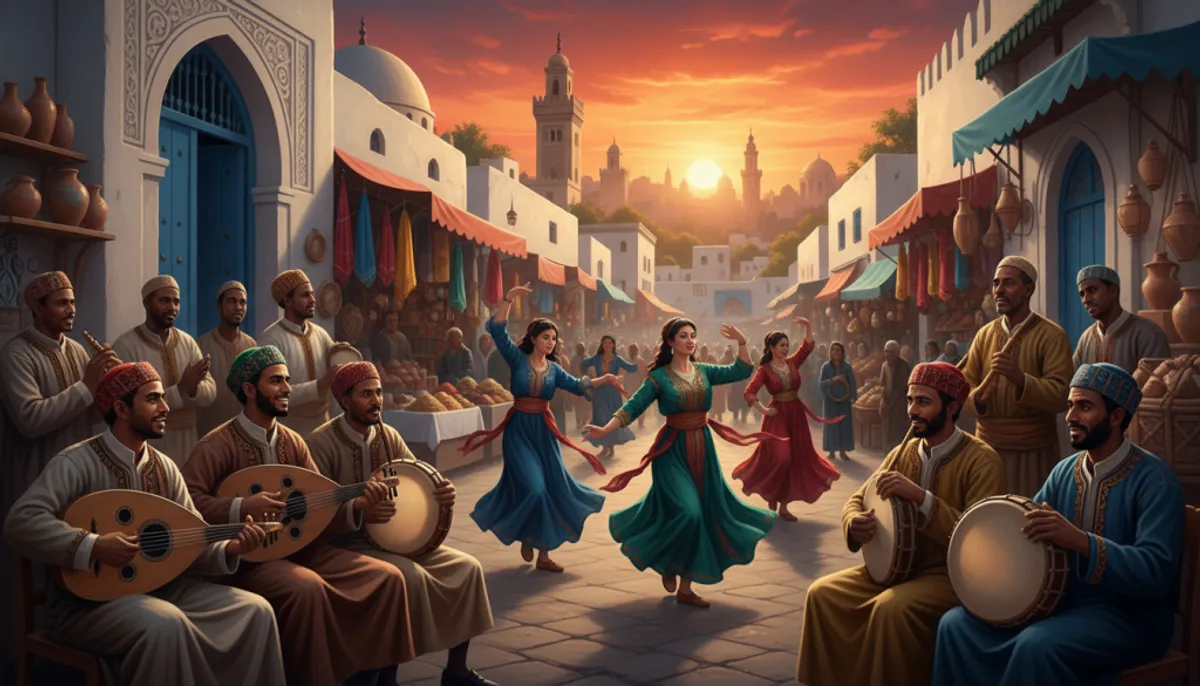
The local music harmoniously fuses Andalusian and Ottoman influences. The Rachidia celebrates its 90th anniversary in 2025, reminding us of its foundational role.
This institution has preserved authentic song since its inception in an anti-colonial context. Anouar Brahem, a virtuoso oud player, received a prestigious European award in 2025.
Theater and Visual Arts
The theatrical scene presents bold creations that have received international awards. These works address universal themes with a unique sensitivity.
Contemporary art galleries combine aesthetic rigor with openness to the world. They contribute to the radiance of music and visual arts.
These events testify to a vibrant and innovative cultural scene, including specific procedures for the cultural card. It engages with contemporary currents while preserving its authenticity.
Tunisian Traditions and Customs
The rhythm of life in Tunisia revolves around living traditions that unite generations. These ancestral practices create a valuable social bond between communities.
Festivals and Popular Events
The annual calendar is marked by major festive events. Eid al-Adha and Eid el-Fitr bring each family together for warm celebrations.
The Mouled honoring the Prophet's birth represents an important spiritual moment. These religious holidays are national public holidays.
Ancestral Rites and Practices
Protective customs date back to ancient Berber beliefs. The khamsa, a Punic symbol, and blue shutters ward off the evil eye.
The zaouïas house the tombs of saint marabouts. These small white edifices welcome family pilgrimages to seek blessings.
The Ghriba synagogue in Djerba illustrates harmonious coexistence. Its annual pilgrimage gathers thousands of people in mutual respect.
Tunisian Crafts and Creations
The skilled hands of artisans have woven the authentic soul of the country for centuries, influenced by various cultural elements, including pop influence. This precious heritage is passed down from generation to generation. It represents a living treasure that amazes visitors.
Traditional Carpets and Pottery
Tunisian carpets fascinate with their complex geometric patterns. Each region develops distinctive styles. From Kairouan to Gafsa, techniques vary but quality remains exceptional.
Pottery reflects meticulous work where local earth becomes art. Artisans in Nabeul perpetuate ancient methods. Their colorful dishes evoke the Punic era.
| Type of Craft | Main Region | Characteristics | Traditional Use |
|---|---|---|---|
| Carpets | Kairouan | Geometric patterns, natural wool | Decoration and insulation |
| Pottery | Nabeul | Glazed earthenware, bright colors | Dishes and decoration |
| Leather | Sousse | Fine leather goods, traditional patterns | Accessories and furniture |
| Ironwork | Tunis | Complex cutouts, arabesque patterns | Grills and decorative elements |
These artisanal creations represent much more than utilitarian objects. They testify to the creative genius passed down by expert hands. Each piece tells a unique story of ancestral know-how.
The Role of Women in Cultural Evolution
The emancipation of women is a major pillar of modern Tunisian development. These women have made their mark in all fields, from politics to science to sports.
August 13 specifically celebrates their national contribution. This official recognition underscores their central place in contemporary society.
Iconic Figures and Social Engagement
Radhia Haddad exemplifies this remarkable journey. Elected as a deputy after independence, she presided over the National Union of women for fifteen years.
Gisèle Halimi, born in La Goulette, became a figure of international feminism. Her struggle transcends national borders.
In the 1920s, Habiba Msika was already captivating with her artistic talent. This Tunisian woman impressed personalities like Coco Chanel.
The scientific excellence of Hajer Bahouri and the sporting achievements of Habiba Ghribi complete this picture. They demonstrate that women excel in all fields.
The Personal Status Code of 1956 accelerated this transformation. It allowed women to occupy influential positions in education and public life.
Languages and Linguistic Heritage
The Tunisian linguistic landscape reveals a fascinating mosaic of historical influences. This country stands out as the most linguistically homogeneous in the Maghreb.
Tunisian Arabic and Its Dialects
Almost the entire population speaks Tunisian Arabic daily. This dialect has developed on a Berber and Punic substrate.
It incorporates Turkish, Italian, Spanish, and French influences. The Tunisians experience an interesting situation of diglossia.
They use dialectal Arabic for oral communication. Modern Standard Arabic, the official language, is reserved for formal contexts.
The Influence of French and Other Languages
French occupies a special place in society. About 30% of Tunisians are truly francophone.
This language remains dominant in business and medical fields. The bilingual Arabic-French education system characterizes the school system.
English, taught from the age of twelve, represents serious competition. The Berber chelha persists in some southern villages.
| Language | Status | Percentage of Speakers | Areas of Use |
|---|---|---|---|
| Tunisian Arabic | Vernacular language | Almost all | Daily communication |
| Modern Standard Arabic | Official language | Mastered by all | Education, administration |
| French | Second language | 30% | Business, medicine, culture |
| English | Foreign language | Growing | Education, international |
| Chelha | Minority language | Less than 1% | Southern villages, Djerba |
Education and Knowledge Transmission
Modern Tunisian education finds its roots in a reformist vision of the 19th century. This fundamental transformation laid the groundwork for the current system.
Sadiki College and the History of Education
Founded in 1875 by Grand Vizier Kheireddine Pacha, Sadiki College represents a decisive step. This pioneering institution aimed to train a national elite open to modern sciences.
In 2025, its 150th anniversary will be celebrated, marking over a century of pedagogical excellence. The institution embodies much more than a simple school project.
The Sadikia represented a true ambitious societal project
Despite the obstacles of the French protectorate after 1882, the institution remained an active intellectual hub. It nourished the national movement and trained committed leaders.
The Khaldounia school, established in 1896, complemented this modern educational work. Together, the two institutions raised the national level of education.
| Institution | Date of Foundation | Main Objective | Lasting Impact |
|---|---|---|---|
| Sadiki College | 1875 | Train the administrative elite | Symbolizes educational modernity |
| Khaldounia School | 1896 | Spread Enlightenment | Essential educational complement |
After independence in 1956, a reform policy unified and nationalized the system. This gradual Arabization affirmed identity while democratizing access to knowledge.
This educational legacy has profoundly shaped society, much like a nepalese festival. It created an educated population with a dynamic intellectual life, making education a national priority.
National Symbols and Cultural Identity
National emblems tell a fascinating story of identity affirmation. They represent powerful visual markers that unite citizens.
These official insignia testify to a rich historical journey filled with transformations. Each element carries a deep significance.
The Tunisian Flag and Its Origins
The flag was created in 1831 at the order of Hussein II Bey. This creation responded to a practical need after the destruction of the national fleet in 1827.
It serves as a distinctive sign to identify Tunisian ships in the Mediterranean. Although a vassal of the Ottoman Empire, the country thus asserts its uniqueness.
The banner is inspired by the Turkish flag but distinguishes itself through an ingenious inversion. The crescent and star are inscribed in a white circle on a red background.
The Coat of Arms and Its Meaning
The national coat of arms was officially adopted in 1861. It underwent significant revisions in 1956 and 1963.
Each element symbolizes an aspect of history and national values. The Punic galley evokes the Carthaginian heritage, while the scales represent justice.
The lion wielding a scimitar embodies the protective strength of the nation. The motto "Liberty, Dignity, Justice, Order" has guided progressive reforms since independence.
| Symbol | Date of Creation | Main Elements | Meaning |
|---|---|---|---|
| National Flag | 1831 | White circle, red crescent and star | Identity affirmation and Muslim belonging |
| Coat of Arms | 1861 (rev. 1956, 1963) | Punic galley, scales, lion, motto | Historical heritage and republican values |
These symbols evolve over time while maintaining a strong connection to the past. They constitute a sign of national unity across generations.
Religious and Spiritual Influences
Spirituality deeply permeates daily life in Tunisia, where religion structures collective rhythms. It provides a shared meaning to community and personal life. To pass culture validation time, these traditions are essential in maintaining the connection between past and present.
The Central Role of Islam in Society
Sunnite Islam represents the state religion, practiced by the vast majority of the population. Its holidays, such as Eid, mark important public holidays that bring families together.
These special days punctuate the year and reinforce social bonds. They are celebrated throughout the country with fervor.
The religious landscape is primarily divided between the Maliki rite (majority) and the Hanafi rite. This diversity reflects historical Arab and Ottoman influences.
| Legal School | Approximate Percentage | Main Historical Influence |
|---|---|---|
| Maliki | 85% | Arab influences |
| Hanafi | 15% | Ottoman influences |
The teaching of this religion is mandatory in public schools. The curriculum also includes the history of Judaism and Christianity, promoting tolerance.
The 2014 Constitution guarantees freedom of belief. It protects the sacred and promotes values of moderation in the public space.
The Great Mosque of Kairouan, founded in the 7th century, symbolizes this ancient rooting. It attracts visitors from around the world.
Spirituality here transcends mere practice. It shapes a culture of coexistence, permeating all aspects of Tunisian life.
Historical Sites and Archaeological Heritage
The Tunisian soil conceals archaeological treasures of inestimable value. Eight remarkable sites are classified as UNESCO World Heritage.
The amphitheater of El Jem impresses with its colossal dimensions. This monument represents the third largest in the Roman world.
Carthage, Kairouan, and Ancient Ruins
The legendary site of Carthage fascinates visitors from around the world. Its millennia-old history continues to reveal its secrets.
The paleochristian museum reopened in 2025 after significant renovations. Its interactive journey sheds light on the late Roman and paleochristian periods.
Recent excavations uncovered an alabaster mask from the 4th century BC. This discovery comes from the Tophet of Salammbô.
In Kairouan, the Aghlabid basins reveal sophisticated hydraulic structures. These works illustrate medieval engineering genius.
| Archaeological Site | Historical Period | Recent Discovery |
|---|---|---|
| Carthage | Punic and Roman | Alabaster mask from the 4th century BC |
| Kairouan | Islamic medieval | Aghlabid hydraulic structures |
| Bechni (Kébili) | Late Roman | Ancient oil press |
| Sbiba (Kasserine) | Antiquity | Ancient necropolises |
The restitution of 11,800 artifacts from the United States marks an important victory. This recovery strengthens the protection of the national heritage.
Each archaeological discovery enriches our understanding of past civilizations. These remains constitute a precious legacy for future generations.
Figures Who Have Marked Tunisian Culture
Tunisian genius is expressed through exceptional figures who have marked global intellectual history, including contributions to african history. These visionaries transcended borders and eras with their fundamental contributions.
Historical and Intellectual Figures
As early as the 2nd century, Tertullian laid the foundations of Latin theology from Carthage. This exceptional man influenced Christian thought for centuries.
Ibn Khaldun revolutionized sociology in the 14th century. His work Muqaddima remains studied worldwide seven hundred years later.
Mohamed Nakhli embodies the intellectual renaissance of the early 20th century. This professor defended the compatibility between reason and religion for thirty-five years.
Influential Contemporary Creators
Albert Memmi analyzes colonial relations with remarkable acuity. His fundamental work, prefaced by Sartre, influences several generations.
The current literary scene shines with talents like Omar Jemli. This young author won the Katara Prize for Arabic Novel in 2023.
Mehdi Hizaoui and Chafik Tarki perpetuate this tradition of excellence. Their contemporary narratives captivate readers with their human depth.
These creators demonstrate the enduring vitality of thought. Their lives and work enrich the intellectual heritage for future generations.
The Contemporary Cultural Scene and Its International Successes
The year 2025 marked a remarkable turning point for the international recognition of local artists and local cuisine. This exceptional period saw cinematic and theatrical works shine on the world's greatest stages.
Film, Theater, and Literature
The film "The Voice of Hind Rajab" by Kaouther Ben Hania had an extraordinary journey. Nominated for the Oscars and Golden Globes, it won the Silver Lion in Venice.
In November 2025, Erige Sehiri triumphed at the Marrakech International Film Festival. Her work "Promised the Sky" won the Golden Star, confirming the excellence of directors.
The play "The Runaways" by Wafa Taboubi won the Golden Tanit at the Carthage Theater Days. This creation also received the Grand Prix of the "Seasons of Creation" Festival.
Cultural Institutions and Recent Festivals
The Carthage Theater Days and the Hammamet International Festival animate artistic life. These major events attract talents from around the world.
The Tunis International Book Fair honors numerous authors and publishers each year. It is an unmissable event for literature enthusiasts.
The magazine GEO dedicated its October 2025 cover to local archaeological heritage. This media recognition enhances the country’s image as a leading cultural destination.
Future Perspectives for Tunisian Culture
The year 2026 opens up new perspectives for local artistic creation. Despite the absence of major reforms in 2025, the cultural scene has demonstrated remarkable resilience.
Institutions, artists, and heritage have carried this vitality during uncertain times. The end of 2025 marked a symbolic turning point with the inscription of kohl on the UNESCO list.
Cultural Reforms and Innovations
This international recognition crowns ancestral know-how. It opens perspectives for valuing artisanal traditions.
The future will depend on the ability to combine creativity and innovation. New technologies offer exciting opportunities.
Challenges and Hopes for Future Generations
2026 appears as the dawn of a new era. The words "reform" and "renewal" regain their breath.
It is time to tackle the accumulated challenges. Society must heal its wounds and resolve structural issues.
| Priority Areas | Concrete Actions | Deadline | Expected Impact |
|---|---|---|---|
| Intangible Heritage | Digitization of know-how | End of 2026 | Sustainable preservation |
| Technological Innovation | Cultural digital platforms | Mid-year | Global accessibility |
| Artistic Training | International programs | Beginning of 2027 | Creative excellence |
| Cultural Funding | Funds dedicated to young talents | Throughout the year | New emergence |
This new chapter in history must be one of action. Every initiative contributes to building a fairer society.
Future generations deserve a horizon where tradition and modernity harmoniously combine.
Conclusion
The extraordinary fusion of civilizations gives birth to endlessly renewed creativity. This exceptional heritage, the fruit of three millennia of history, represents much more than a frozen legacy. The rich tapestry of norman folklore adds another layer to this cultural mosaic.
Tunisian culture constitutes a living force that evolves with its time. It maintains a delicate balance between ancestral traditions and contemporary innovations.
Every explored aspect testifies to this remarkable vitality. The culture reinvents itself each time, while preserving its deep authenticity.
This successful synthesis continues to inspire the whole world. It demonstrates that a country can shine culturally by valuing its heritage while cultivating excellence.
FAQ
What are the best times to discover traditions in Tunisia?
Festivals and popular events, such as the month of Ramadan or the celebration of Mouled, are ideal occasions. National celebration days also allow for experiencing local customs.
How is Tunisian craftsmanship transmitted today?
Carpet, pottery, and leatherwork are often taught within families. Institutions like the National Office of Handicrafts encourage this creation through training.
What role do women play in current society?
Women occupy an increasing place in public life, education, and the arts. Their influence is visible in professional and cultural spheres.
Which historical sites are must-see for a first trip?
Carthage, Kairouan, and the Bardo Museum top the list. These cities house exceptional archaeological heritage that tells the story of the country.
Does religion still influence daily life?
Islam remains present in social relations and customs, but Tunisian society harmoniously blends tradition and modernity.
Can one easily taste local cuisine during a stay?
Absolutely! Mint tea, couscous, or pastries are accessible everywhere. Each region offers its specialties with a unique taste expression.